
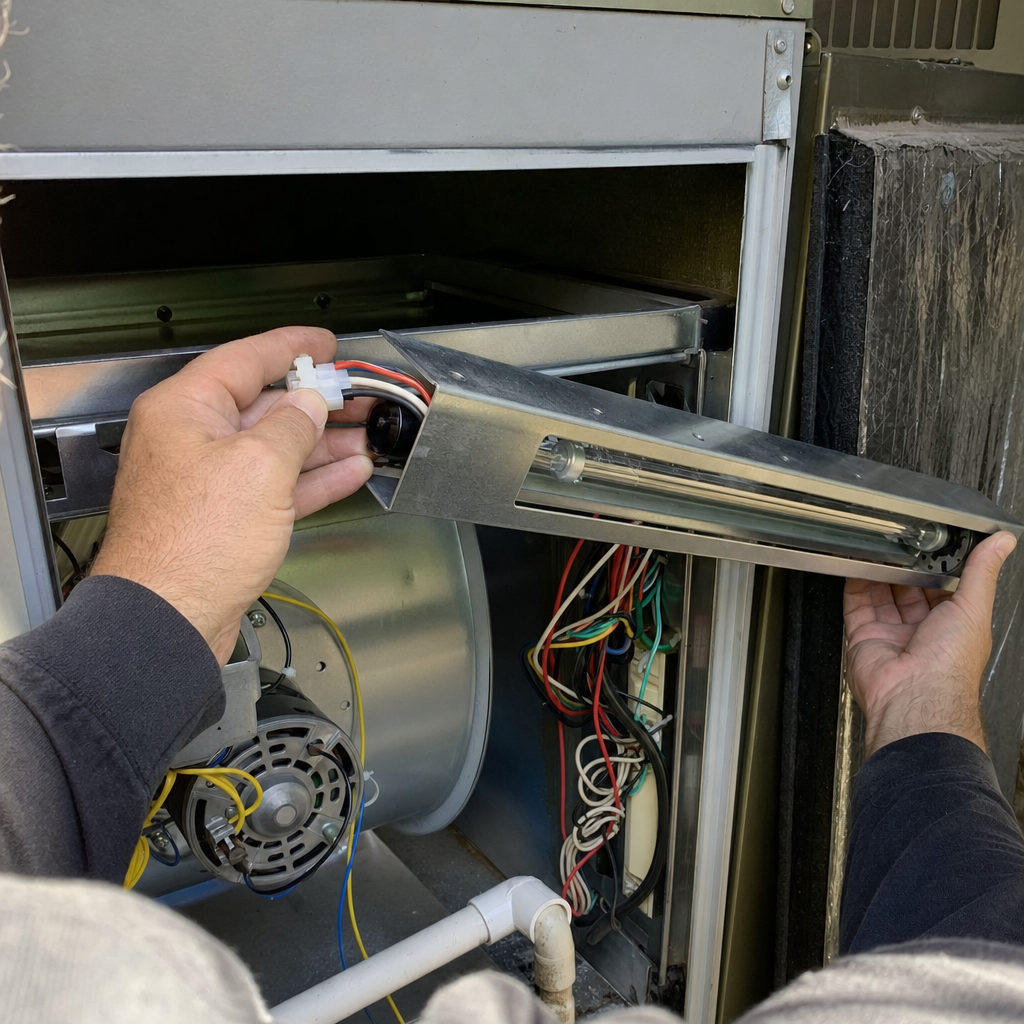
Honeywell Coil Cleaning: The Philadelphia Owner’s Guide
Honeywell coil cleaning in Philadelphia typically runs $280-$520 for a full evaporator or condenser coil service, depending on accessibility and contamination level, and we stock the tools and treatments for same-day scheduling in most neighborhoods. Most homeowners realize their coil needs attention when the upstairs never gets cool in July, or when their electric bill spikes $80-$120 during a humid August week and the system runs nonstop. We take a look at what is actually there, and then we tell you what we found.
Which Honeywell Models This Applies To
Honeywell builds coils into several product families, and the cleaning approach changes with the housing. We regularly service the HCFC series evaporator coils found in horizontal attic installations across Roxborough and Chestnut Hill, the HCFS cased coils paired with split heat pumps in older Manayunk rowhomes, and the DR90/DR120 dehumidifier coils that clog fast in Philadelphia’s basement humidity. The label is usually on the coil cabinet face or the upstream panel; you’ll see a model starting with HCFC, HCFS, or DR followed by digits. If the label’s worn off, measure the cabinet width and note the refrigerant type stamped on the outdoor unit.
We clean with OEM-spec foaming agents and low-pressure rinses that match Honeywell’s fin spacing, which is tighter than some Carrier units. For homeowners near the Wissahickon, where cottonwood season hits hard in late May, we also stock protective treatments that extend the interval between deep cleans. Bellows Air Duct & Vent Co. of Philadelphia is an independent service provider with no affiliation to Honeywell.
Signs Your Honeywell Coil Cleaning Is Failing
- Weak airflow from vents. The coil’s fins are packed with dust and biological growth, choking the air that should reach your rooms. In Philadelphia’s pollen-heavy springs, we’ve pulled coils that look like felt.
- Ice formation on the coil or refrigerant lines. Dirt acts as insulation; the coil can’t absorb heat properly, so condensation freezes instead of draining. Left alone, this cracks the copper.
- Musty or sour smell when the system runs. Bacterial buildup on a wet coil produces that basement-locker odor. It gets worse in August when humidity holds above 70% for weeks.
- System short-cycling or running constantly. The thermostat never satisfies because the coil can’t exchange enough BTUs. Your compressor takes the punishment, and that’s a far costlier repair.
- Water stains on the ceiling below the air handler. A dirty coil overflows the condensate pan or blocks the drain path. We’ve seen this collapse plaster in Center City condos with stacked mechanical closets.
Replacement Cost & What’s Included
Coil cleaning is not a replacement part job, but the service breaks down honestly. For accessible coils in basements or garages, expect $280-$380. Attic installations, tight mechanical closets, or coils requiring refrigerant recovery add labor and run $400-$520. That covers foaming cleaner application, low-pressure fin straightening, drain pan treatment, and camera documentation before and after.
We disclose the full price before touching a tool. Our $89 Seasonal Tune-Up includes a coil inspection if you’re unsure whether a full clean is needed. Every cleaning carries our 90-Day Done Right Promise - if airflow or odor issues persist, we return at no charge, no paperwork required.
DIY or Call Us?
A homeowner can safely check the filter, clear visible debris from the outdoor condenser fins with a garden hose on gentle spray, and verify the condensate drain isn’t clogged at the exit pipe. Beyond that, evaporator coils sit inside the plenum, often above a heat exchanger or near live electrical connections. The foams sold at hardware stores can corrode aluminum fins if left too long, and high-pressure water bends them permanently. We don’t recommend opening the sealed cabinet. If your Honeywell coil is behind a screwed panel or in an attic with limited decking, call us. We’ll give you a straight price over the phone and show you the camera footage so you see what we saw.
FAQs
How long does a Honeywell coil cleaning take?
Most residential cleans take 90 minutes to two hours, including setup, treatment dwell time, rinse, and camera documentation. Tight installations in Philadelphia rowhomes may stretch to three hours. Call (833) 962-5679 to book a morning or afternoon slot.
Can a dirty coil be repaired instead of cleaned?
Cleaning is the repair for contamination. If fins are corroded through or copper tubes are cracked from ice damage, the coil needs replacement, not cleaning. We camera-inspect first and tell you which situation you’re in before quoting. Our Free Second Opinion on Any Written Estimate applies if another company has already recommended replacement.
How often should a Honeywell coil be cleaned in Philadelphia?
Every three to five years for most homes, but every two years if you’re near major tree cover, have pets, or run the system year-round. Philadelphia’s combination of pollen, humidity, and older ductwork accelerates buildup compared to drier climates.
Do you stock Honeywell-compatible cleaning equipment?
Yes. Our trucks carry Rotobrush and Nikro equipment, plus foaming agents matched to Honeywell fin densities. We also stock Lennox, Trane, and Carrier treatments for mixed-system homes. Same-day availability covers most Philadelphia neighborhoods including Roxborough, Manayunk, Chestnut Hill, and Center City.
Ready to get your Honeywell system breathing right? Call (833) 962-5679 for a free estimate. We’ll answer live, schedule at your convenience, and show you exactly what we found before we start. That’s the square deal we’ve delivered for over 42 years.
Written by Dennis Farrell, Owner, Bellows Air Duct & Vent Co. of Philadelphia at Bellows Air Duct & Vent Co. of Philadelphia, serving Philadelphia and nearby areas.